

Most cases of lower back pain are mechanical—caused by muscle strain, ligament sprains, or disc issues. While painful, these typically resolve with rest and conservative treatment. However, when lower back pain is accompanied by a fever, it is a red flag that signals a systemic infection or an inflammatory process.
This combination of symptoms is considered a medical emergency because the infection could be affecting the spine itself, the surrounding tissues, or the urinary system, which requires immediate diagnosis and treatment to prevent severe complications, including neurological damage.
The Critical Symptoms: When to Seek Immediate Care
If you experience new or worsening lower back pain alongside any of the following symptoms, you must seek urgent medical attention:
- Fever and Chills: A temperature above 100.4°F (38°C) is the most immediate sign of an active infection.
- Neurological Deficits: Numbness, weakness, or tingling in the legs, groin, or feet.
- Bowel or Bladder Dysfunction: Inability to control bowel movements or urination, or difficulty initiating urination (a key sign of potential spinal cord compression).
- Pain that is Worsening and Constant: Pain that is unrelieved by rest, position change, or pain medication, and often described as being worse at night.
- Recent History: Back pain developing shortly after a recent surgery, a fall, an infection (like a skin infection), or in individuals with compromised immune systems (e.g., due to diabetes or steroid use).
Three Serious Causes of Back Pain and Fever
The infectious causes of back pain can originate from three main areas: the urinary system, the spinal structures, or the deeper soft tissues.
1. Pyelonephritis (Kidney Infection)
This is often the most common cause of back pain accompanied by fever. A bladder infection (UTI) travels up the ureters to infect one or both kidneys.
- Symptoms: Pain is typically felt in the flank (side and lower back) and can be dull or sharp. It is accompanied by high fever, chills, nausea, vomiting, and often painful or frequent urination (dysuria).
2. Vertebral Osteomyelitis and Discitis
These are infections of the bones of the spine (vertebrae, or Osteomyelitis) or the disc space between them (Discitis). These are often caused by bacteria traveling from another infected site in the body (e.g., skin infection or dental abscess) via the bloodstream.
- Symptoms: Severe, localized, unrelenting back pain that often worsens with movement. It can be exquisitely tender to the touch over the affected spine segment. Fever is common.
This is a collection of pus or infected material that forms between the bony spine and the protective membrane (dura) surrounding the spinal cord. It is extremely serious because the growing abscess can rapidly compress the spinal cord.
Heather Smith – Quote
In the emergency room or clinic, rapid diagnosis is key to starting the correct IV antibiotic treatment.
The Diagnostic Pathway
Blood Tests: Bloodwork will check for markers of infection and inflammation, such as a high White Blood Cell (WBC) count and elevated C-Reactive Protein (CRP). Blood cultures will be taken to identify the specific bacteria causing the infection.
Urinalysis and Urine Culture: These tests are essential to confirm or rule out a kidney infection (Pyelonephritis).
Imaging:
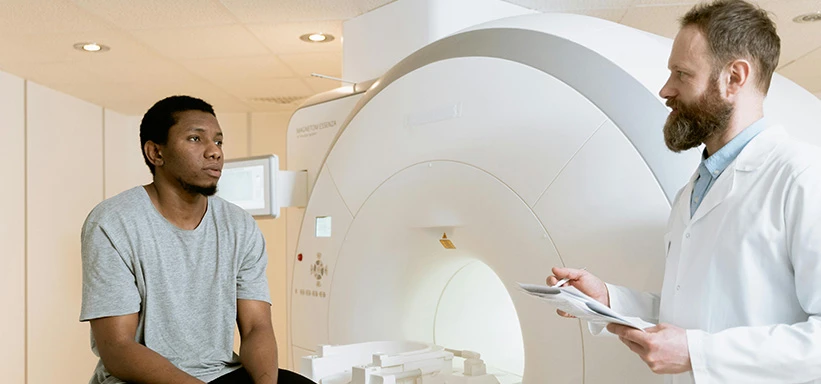
- MRI (Magnetic Resonance Imaging): This is the definitive test for diagnosing spinal infections (Osteomyelitis, Discitis, and Epidural Abscess). It provides clear images of the soft tissues, discs, and spinal cord to locate the infection and determine if compression is present.
CT Scan: Used when MRI is not feasible, particularly to look at bony destruction.


Treatment Focus
Treatment is centered on aggressive management of the underlying infection. For kidney infections, intravenous antibiotics are often started immediately. For spinal infections, long-term antibiotic therapy (sometimes six to eight weeks) is necessary, and urgent surgical decompression may be required if an abscess is compressing the spinal cord.
Never assume back pain accompanied by fever is just a severe flu. It requires immediate medical evaluation to protect your spinal cord and vital organs.